


Thank you for Subscribing to Med Tech Business Review Weekly Brief

Lauxera Capital Partners
Samuel Levy, MD, Founding Partner
The Rise of The Outsourced Medtech Innovation Services

Samuel Levy
Translating an idea for a Medtech innovation into a product with clinical evidence and regulatory approval is an odyssey. It’s an odyssey I know well as I had the privilege of stewarding a Medtech innovation from an idea on a napkin to commercialization in 40 countries with my co-founder and talented colleagues at Allurion Technologies. The capabilities, deep content knowledge, and execution bandwidth needed to animate this journey are daunting. A rich, fragmented and highly capable Medtech innovation services outsourcing ecosystem has blossomed over the past two decades to enable agile startups and ambitious strategies to accelerate product launches. The Pharmaceutical industry transformed its drug development processes 25 years ago integrating high-performance contract research organizations into core functions. Medtech has lagged Pharma, but the winds are changing.
Medtech products are becoming more and more complex with the advent of machine learning, surgical robotics, and deep software integration needs. These product attributes increase regulatory complexity, put pressure on quality systems, and make clinical trial execution more challenging. The European MDR quagmire has been an additional source of pressure as more than 500,000 medical devices are submitted for re-certification from a handful of notified bodies. These industry macro trends drove my private equity firm, Lauxera Capital Partners, to launch a strategic sourcing initiative focused on doing great deals in the MedTech innovation services sector. The sector is booming. MedTech spending on outsourced services has grown at a 12%CAGR over the past five years driven by numerous macro trends. Following a Covid-driven year-over-year decline in 2020, MedTech clinical trial starts boomed in 2021 necessitating substantial provisioning of outsourced clinical trial services. Broad clinical trial execution challenges linked to staffing shortages and Covid-related disruptions persist and are dragging out trial timelines while threatening data integrity and operational bias.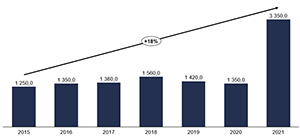 Within the startup segment, venture capital funding levels have surged driven by strong investor interest in software-intensive MedTech products. Recently introduced reimbursement paradigms for digital therapeutics (such as DIGA in Germany) necessitate clinical data generation, a robust quality system and regulatory approval.
To foster MedTech innovation, accelerate market access for life-saving medical devices and capture value linked to the above trends, Lauxera Capital Partners has made two investments focused on Medtech innovation services.
End to End Medtech Innovation Services: Veranex
The MedTech innovation service provider landscape is fragmentedly comprised of a vast number of small firms operating within a single vertical. This has several implications for MedTech clients seeking outsourced services. Substantial time is wasted getting each new service provider up to speed on a particular device’s design, mechanism of action, and clinical and regulatory history. There is, unfortunately, limited or poor coordination between service providers serving the same company from different institutions. MedTech clients frequently encounter poor customer service and missed deadlines from under-resourced, sub-scale providers seemingly continuously back-filling resources only after confirming engagements.
Alongside Summit Partners and AccelMed, Lauxera Capital Partners invested inVeranex, a MedTech concept-to-commercialization outsourced services partner. Our shared vision is to build the market-leading end-to-end solution provider for our industry. Veranexoffers its clients the capabilities needed for the entire product development journey including Product Design & Engineering, Regulatory Affairs, Medical Device Evaluation, Data Management &Analytics, Commercial Strategy& Market Access.
Electronic Quality Management Software: Matrix Requirements
Within the startup segment, venture capital funding levels have surged driven by strong investor interest in software-intensive MedTech products. Recently introduced reimbursement paradigms for digital therapeutics (such as DIGA in Germany) necessitate clinical data generation, a robust quality system and regulatory approval.
To foster MedTech innovation, accelerate market access for life-saving medical devices and capture value linked to the above trends, Lauxera Capital Partners has made two investments focused on Medtech innovation services.
End to End Medtech Innovation Services: Veranex
The MedTech innovation service provider landscape is fragmentedly comprised of a vast number of small firms operating within a single vertical. This has several implications for MedTech clients seeking outsourced services. Substantial time is wasted getting each new service provider up to speed on a particular device’s design, mechanism of action, and clinical and regulatory history. There is, unfortunately, limited or poor coordination between service providers serving the same company from different institutions. MedTech clients frequently encounter poor customer service and missed deadlines from under-resourced, sub-scale providers seemingly continuously back-filling resources only after confirming engagements.
Alongside Summit Partners and AccelMed, Lauxera Capital Partners invested inVeranex, a MedTech concept-to-commercialization outsourced services partner. Our shared vision is to build the market-leading end-to-end solution provider for our industry. Veranexoffers its clients the capabilities needed for the entire product development journey including Product Design & Engineering, Regulatory Affairs, Medical Device Evaluation, Data Management &Analytics, Commercial Strategy& Market Access.
Electronic Quality Management Software: Matrix Requirements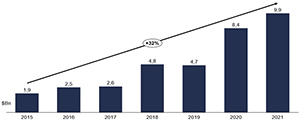 Remote work, software-intensive MedTech development efforts, and increased regulatory scrutiny have put substantial pressure on MedTech quality management systems (QMS) and their functional leaders. In a world where traceability, consistency, and one truth across up-to-date documents are paramount, electronic quality management systems are rapidly replacing paper-based systems and non-MedTech QMS-specific cloud and electronic signature solutions.
Earlier this year, Lauxera acquired a majority stake inMatrix Requirements, a German software company focused on MedTech QMS software solutions for complex and software-intensive devices. The company’s flagship offering is an Application Lifecycle Management tool (ALM) enabling clear visualization and traceability of technical specifications, risks, tests, and test results. The company also provisions a highly flexible and customer-centric Quality Management System that reduces audit risk and accelerates time to market.
Medtech innovation is hard and getting harder. Critical to success is getting the expertise you need relevant to your specific circumstance now. Increasingly, that requires an organization like Veranex on global scale. Increasingly, successful audits (and ultimately, regulatory clearances) require optimizing processes and coordinating the work output of geographically diffuse teams. Software is eating the Medtech quality function led by world-class tools like Matrix Requirements. Translating an idea for a Medtech innovation into a product with clinical evidence and regulatory approval is an odyssey. It’s an odyssey that will increasingly be supported by technology-enabled MedTech innovation service providers.
Remote work, software-intensive MedTech development efforts, and increased regulatory scrutiny have put substantial pressure on MedTech quality management systems (QMS) and their functional leaders. In a world where traceability, consistency, and one truth across up-to-date documents are paramount, electronic quality management systems are rapidly replacing paper-based systems and non-MedTech QMS-specific cloud and electronic signature solutions.
Earlier this year, Lauxera acquired a majority stake inMatrix Requirements, a German software company focused on MedTech QMS software solutions for complex and software-intensive devices. The company’s flagship offering is an Application Lifecycle Management tool (ALM) enabling clear visualization and traceability of technical specifications, risks, tests, and test results. The company also provisions a highly flexible and customer-centric Quality Management System that reduces audit risk and accelerates time to market.
Medtech innovation is hard and getting harder. Critical to success is getting the expertise you need relevant to your specific circumstance now. Increasingly, that requires an organization like Veranex on global scale. Increasingly, successful audits (and ultimately, regulatory clearances) require optimizing processes and coordinating the work output of geographically diffuse teams. Software is eating the Medtech quality function led by world-class tools like Matrix Requirements. Translating an idea for a Medtech innovation into a product with clinical evidence and regulatory approval is an odyssey. It’s an odyssey that will increasingly be supported by technology-enabled MedTech innovation service providers.
The articles from these contributors are based on their personal expertise and viewpoints, and do not necessarily reflect the opinions of their employers or affiliated organizations.
